Inflation can be complicated, but the price of a Freddo makes it instantly understandable. For decades, the tiny chocolate frog has been Britain’s unofficial inflation index, a simple way to see how the value of the pound has changed over time. As Freddo prices rise, they reveal how everyday buying power quietly erodes long before most people notice. Here’s why the Freddo Index matters, and what it teaches us about inflation today.
Why the Freddo has become a symbol of UK inflation
Everyone remembers the price of Freddos when they were younger with surprising clarity, as if it were a milestone. It’s the closest thing Britain has to universal currency, your financial literacy didn’t matter, you just knew how many Freddos you could afford with the change in your pocket.
That shared memory is why rising Freddo prices feels personal. When the cost jumps, it’s not just inflation, it's an attack on nostalgia.
A brief Freddo price history, from 10p treat to inflation icon
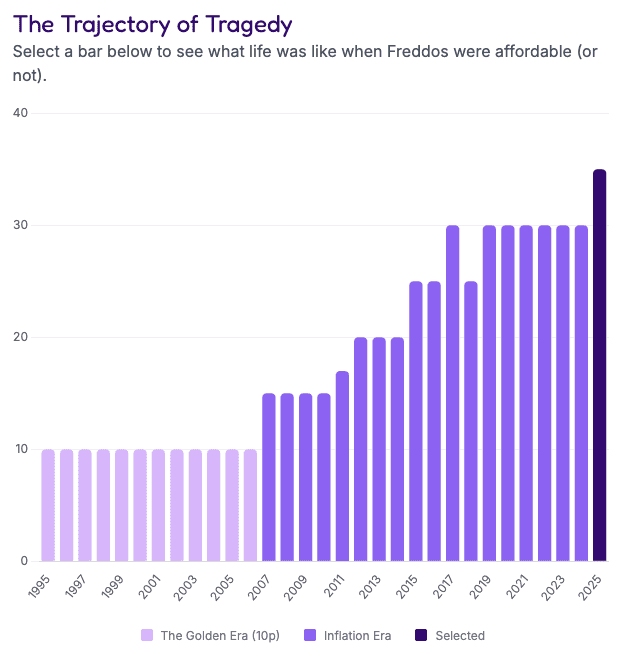
There’s even an entire website dedicated to tracking the ever-creeping price of a Freddo from 1995 to 2025, and the picture it paints is not pretty.

Source: https://thefreddoindex.com/
The cost of a Freddo has increased by 260% since 1995. At this point, the Freddo isn’t just a chocolate, it’s an economic cautionary tale.
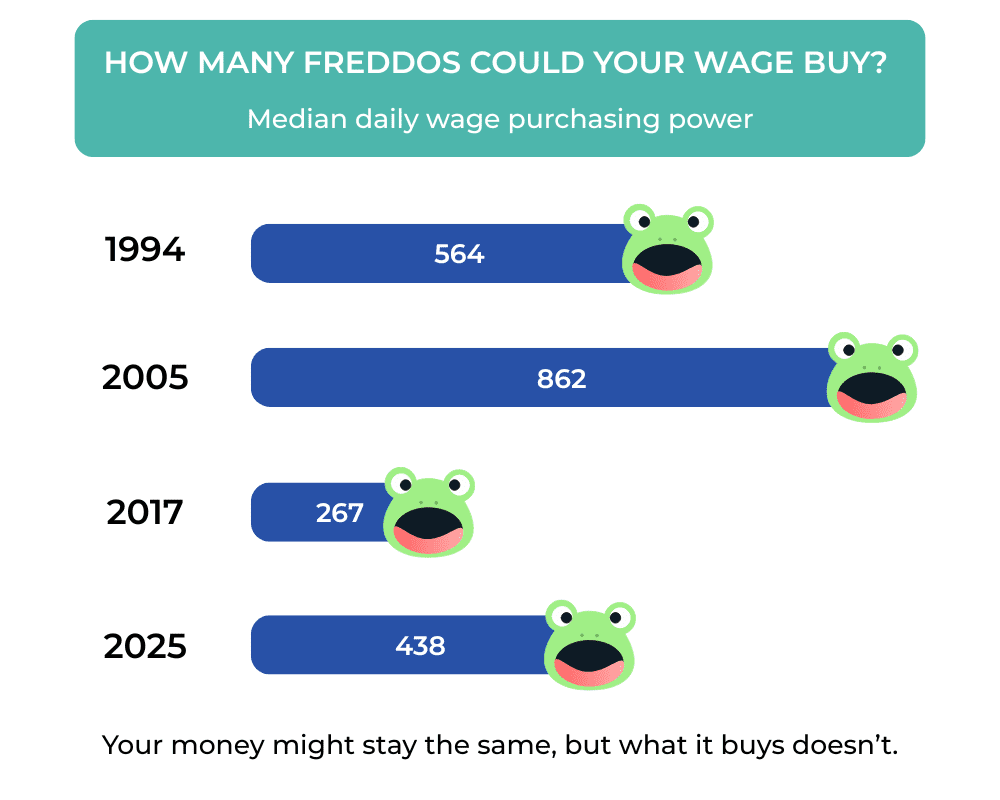
According to analysis by the times:
- In 1994, the median daily wage could buy 564 Freddos.
- By 2005, with Freddos still only 10p, that number rose to 862.
- In 2017, when the price hit 30p, that dropped sharply to 267.
- In 2025, the same worker could afford 438 Freddos, still only half as many as 20 years earlier.
Shrinkflation – The sneaky sidekick
Shrinkflation is reducing product size without reducing the price, and has quietly taken over the modern retail world. It’s subtle, strategic, and universally annoying.
To their credit, Freddos have mostly escaped shrinkage; they were already tiny enough to begin with, which might be their only saving grace.
How Freddo inflation reflects the real cost of living
While no economists have proposed a Freddo based monetary policy framework (yet), the connection between Freddo prices and how people feel about inflation is undeniable.
Freddos work because they translate a complex economic force into something everyone understands. Whether or not you follow financial markets, you know when the price of a Freddo has gone up, and you know instinctively what that means for the rising cost of living.
Inflation quietly erodes the value of your pound. Your bank balance might look the same from one month to the next, but what that money can buy is constantly changing. Your shopping basket creeps up in price long before you feel it in your account, making inflation one of the biggest financial risks people face, often without realising it.
The chocolate-based conclusion
If rising Freddo prices tell us anything, it’s that inflation affects all of us - whether we’re buying chocolate or planning for the future. Understanding how the value of the pound changes over time is one of the simplest steps you can take to protect your finances.
If you’d like help understanding what inflation means for your own financial position, your long term goals, or your day to day budgeting, speak to one of our financial advisers who can guide you through it in plain English, no economic jargon required (and sadly, no, they can’t bring back 10p Freddos).
We hope you have a wonderful Easter filled with good company, relaxation and plenty of chocolate (ideally at pre-inflation prices)